Introduction to Agile

PMI Verified  Authorized Training Partner

8,500+ Professional Careers Supported

Training Overview

Agile is the future of project management. Many companies are adopting agile methodologies to increase team performance and improve customer satisfaction. This one-day virtual course is designed to teach you the principles and practices of Agile, such as Scrum.

Virtual Introduction to Agile Courses

Next Available Date:

There are currently no public dates available. However, this course is still available for private or group training. Contact us for more information.

Are you looking to certify 10+ employees?

Request Corporate Training

Learning Objectives

  • Understanding what types of projects are ideal for applying Agile practices
  • Crafting a product roadmap that is focused on delivering a consistent value stream that is recognizable to the customer
  • How to become more accurate at estimating work and delivering on commitments
  • How to manage an evolving product backlog with changing requirements
  • How to write better requirements using user stories and acceptance criteria that best represents the voice of the customer
  • How to create and interpret “Information Radiators” and make timely decisions that impact the success of a project
  • How increasing customer interaction and transparency will better ensure that the product being delivered delights the customer
  • How to employ Agile practices that improve quality, reduce defects and speed up delivery time

Skill Level

Designed for newcomers to project management and senior technical staff looking to advance their careers with project management. This course demystifies project management and offers practical exercises, empowering students to confidently handle basic projects independently.

Delivery

This is a 1-day online course, delivered through a virtual platform.

Course Agenda

Dive deep into the foundations of agile with a focus on its core philosophies, transitioning to hands-on learning of prominent agile project management practices like Lean, Scrum, and Kanban. Gain insights into the cultural challenges of agile adoption, familiarize yourself with roles in the Scrum framework, and differentiate between Scrum, Kanban, and traditional Waterfall project management. By the course’s conclusion, evaluate if agile methodologies align with your organization’s or project’s objectives.

  • Agile Foundation
    • Agile Development Overview
    • When is Agile Appropriate?
    • Agile Manifesto
  • Agile Fundamentals
    • Agile Environment
    • Workshops
    • Project Charter
    • Agile Release
    • Product Backlog
    • Value-Based Prioritization
    • Product Backlog Grooming
    • User Stories
    • INVEST
    • Story Maps
    • Epics
  • Agile Methods
    • Agile Methods Overview
    • Scrum Introduction
    • Sprint Planning Meeting
    • Sprint Goal
    • Modeling
    • Sprint Backlog
    • Daily Scrum Meeting
    • Sprint Review Meeting
    • Definition of Done (DoD)
    • Abnormal Sprint Termination
    • Retrospective
    • The Scrum Team
  • Agile Communications
    • Team Chartering
    • Stages of Team Development
    • Communications Management
    • Social Media-based Communications
    • Agile Tooling
    • Information Radiators
    • Task/Kanban Board
    • Work in Progress (WIP) Limits
    • Sprint Burndown Chart
    • Release Burnup Chart
  • Agile Estimating
    • Relative Sizing
    • Story Points
    • Affinity Estimating
    • Wideband Delphi Technique
    • Planning Poker
    • Consensus Building
    • Velocity
  • Agile Metrics & Product Quality
    • Cause and Effect
    • Managing with Agile KPI’s
    • Test Driven Development (TDD)
    • Unit Testing
    • Acceptance Testing
    • Escaped Defects
  • Agile Leadership
    • Leadership Theories
    • Knowledge Sharing
    • Active Listening
    • Brainstorming
    • Negotiation
    • Stakeholder Management
    • Coaching and Mentoring
  • Agile Contracts and Accounting Principles
    • Burn Rate

Eligibility Requirements

To apply for this course, you need to be:

  • Proficient in both written and verbal English. In other words, if English is not your first language, you must have a minimum overall International English Language Testing System (IELTS) score of 6.5 with a minimum of 6.0 in each band, or the equivalent Test of English as a Foreign Language (TOEFL) score.
  • Reasonable numerate – i.e. understand basic arithmetic. Thus we require learners to have at least a Junior Certificate, or equivalent.
  • Computer literate. To access our learning management systems and virtual classroom-based courses, you need to be comfortable with basic information and communications technology. You are also expected to provide their own computer equipment to access our learning systems.

Why Study with Velopi?

Since our foundation in 2007, Velopi has carved a niche in the project management training space that is based firmly on close relationships with both companies and individuals. As our clients’ needs have evolved, so have our project management training courses. Today, we offer a comprehensive range of project management courses that are designed to meet the needs of any organisation or individual.

10k Careers Supported - 95% Exam Pass Rate
“Velopi helped us achieve our first objective – gaining a high-level overview and common understanding of project management across the Team. We found the learning particularly useful in examining the versatility of our product and methodologies to meet our customer needs.”

Aisling Creedon
Team Lead, Enterprise Customer Success, Teamwork

“The biggest impact that the Velopi course had on me was learning how the science and framework of project management can help in managing people as well as through interpersonal and direct communication- the penny really dropped about this for me during the course.”

Ann Heffernan
Tyndall

Brands We’ve Worked With

FAQs

Everything you need to know about the course. If you can’t find the answer you’re looking for, chat with our team.

Velopi’s courses are aimed at adult learners. We value the life experiences of our students and encourage everyone attending to contribute and to apply their existing experience to new situations.

At the start of each course, students will be provided with their instructor’s e-mail address and contact phone number. They are invited to make contact if they have any questions after the class.

Each one of the “Club PDU” courses are stand-alone offerings.
Following a continuing professional development course, many students are inspired to take their project management development a step further and we encourage our students to discuss their career plans with us. We can recommend further formal training leading to more advanced qualifications.

All students will receive a Certificate of Completion. This certificate sends out a strong signal that you are serious about the project management profession and seek to develop further in this role.

All of our instructors are Project Management Professionals (PMPs)®. Each has over a decade of industry experience and uses this to provide plenty of real-world examples to bring the courses to life.

Project management is a transferable skill. Thus these courses are relevant to all industries from Medical Devices, through Pharmaceutical, Financial Services, Construction & Engineering, the Public Sector, to Information & Communications Technologies.

This is reflected in the nature of our case study exercises. Students quickly realize that the problems they have faced in the workplace are very similar to those outlined in class.

Students also meet project managers from other industries and networking with these brings home the universal nature of most project management issues.

Yes we do! Please contact us to discuss your requirements. Many of our courses can also be delivered, face-to-face, at your own facility.
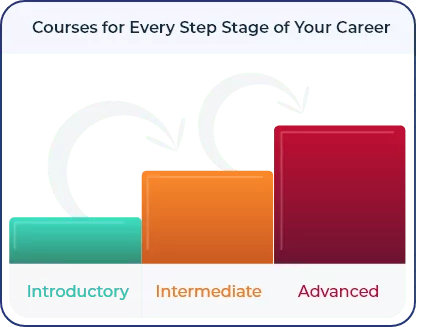
This is very much an introductory course and, as such, is ideal for someone who is new to agile development.

Related Blogs

Get In Touch with Us

We’d love to hear from you.

Loading form...